
Plant Journal
Plant Journal: Growing Sweet Peas on a London Balcony from Seed to Bloom
October 10, 2026
Two metres by four, north-east facing, shaded by a plane tree until about eleven. By any sensible measure this is not sweet pea country. Sweet peas want sun, deep soil and something tall to climb, and in a pot they will wilt by teatime if you look away. I sowed them anyway, in February, in cardboard tubes on the kitchen windowsill — and by mid-July they were reaching over the balcony rail and filling jam jars on the sill.
What follows is the season roughly as it happened: what germinated, what sulked, and the small adjustments that made the difference between a few straggly stems and a proper cut-and-come-again crop.
Why sweet peas earn their space on a balcony
They are annuals, which suits container growing. You are not committing a large pot to a shrub for ten years; you get one generous season, then the compost goes onto the flower beds and the pot is free again. Sweet peas are also unusually productive for the room they take. Three plants in a 35 cm pot will give you a decent bunch every few days from June into September, as long as you keep cutting.
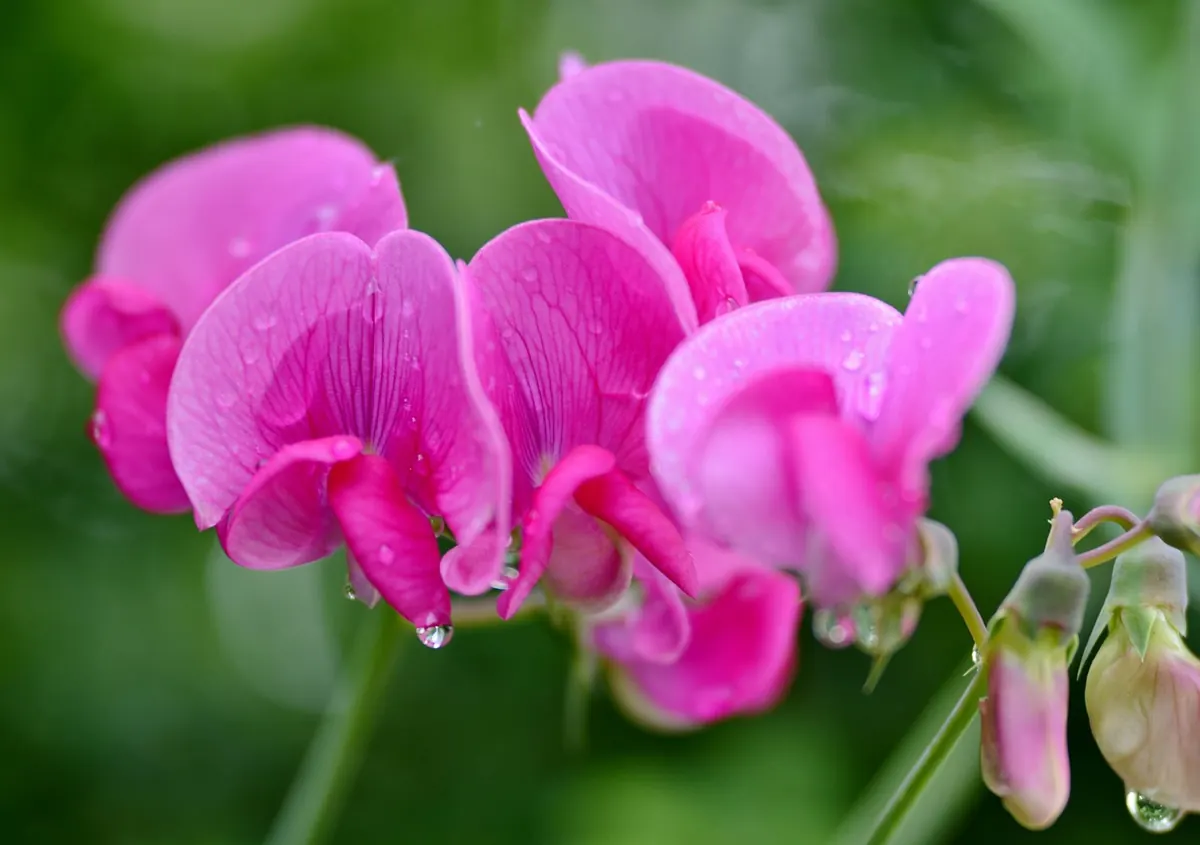
Choose for scent before you choose for colour. The old grandiflora types — 'Cupani', 'Matucana', 'Painted Lady', 'Mollie Rilstone' — carry smaller flowers but a fragrance you can smell from the doorway. Many of the big modern Spencer varieties are gorgeous and barely register on a warm afternoon. If space is genuinely tight, the knee-high and dwarf types such as 'Little Sweetheart' will grow happily in a window box. The stems are short, but the scent is real and they do not need a two-metre obelisk.
Sowing: timing, compost and the nicking question
There are two windows for sowing. Sow in late September or October and the plants overwinter small and sturdy, flowering from early June. Sow in late February or March under cover and you will be cutting from July. Autumn sowing gives the better plants, but only if you can offer them light and cool. A warm flat in January produces pale, drawn seedlings that never quite recover, so if your only option is a warm windowsill, wait until spring.
- Fill deep root trainers, or cardboard tubes stood upright in a tray, with seed compost. Sweet peas make a long taproot and resent disturbance, so depth matters more than width.
- Sow one seed per tube, about 2 cm deep. Water from above and let it drain properly.
- Keep the trays at roughly 12–15°C. Germination takes ten days to a fortnight. Cooler is better than warmer.
- Move seedlings into the brightest light you have the moment they break the surface, turning the tray daily.
On nicking: chipping the hard seed coat with nail clippers does speed things up, and a few hours of soaking helps older seed. Fresh seed from a reliable packet usually germinates perfectly well without either. What you must guard against is mice, which will dig out an entire tray overnight. A lidded propagator, or a sheet of netting pegged over the tray, solves it.
Pinching, hardening off and planting up
When a seedling has two or three pairs of true leaves, pinch out the growing tip with your fingernails. It feels wasteful. Do it anyway — the plant responds by throwing out side shoots, and a bushy plant gives you far more flowers than a single leggy stem.
Harden the plants off over a week or so, bringing them in at night at first, then leaving them out. Then plant them into their final pots. Depth beats width: 30 cm minimum, and a 35–40 cm pot takes three plants comfortably, while a 75 cm trough takes five or six.
For compost, I mixed two parts peat-free multi-purpose with one part loam-based compost, plus a handful of grit and a spoonful of slow-release general fertiliser. The loam holds water and weight, which matters when a plant is two metres tall and the wind gets under it.
For support, an obelisk or a wigwam of 1.8 m canes works well. A trellis fixed to the wall is better still if you are allowed to drill — check your lease or ask the freeholder first, and never simply wedge a tall frame against a railing where it can topple into the street below. Tie new growth in with soft twine in a loose figure of eight, never wire.
Watering, feeding and the training regime
Containers dry out fast, and sweet peas are thirsty. From June I watered every morning, and again in the evening during a hot spell, directing the water at the compost rather than the foliage, which helps keep mildew at bay. A gravel or bark mulch on the surface slows evaporation noticeably, and a saucer under each pot buys you a few extra hours on a hot day.
Start feeding when the first buds appear: a high-potash tomato feed once a week, diluted according to the packet. Before that, the slow-release fertiliser in the compost is enough.
Weekly jobs, which take about ten minutes:
- Tie in the new growth, keeping the main stem vertical.
- Remove tendrils as they appear. They grip smooth canes poorly in wind and waste energy; the twine does the job better.
- Pinch out side shoots to two leaves if you want long stems for cutting.
- Water thoroughly, twice on hot days.
- Cut every flower that opens.
You can skip the side-shoot pinching and let the plants bush out, which gives a fuller, wilder look and shorter stems. Both approaches work; the tidy single-stem method simply gives you better flowers for a vase.
Cutting: the more you take, the more you get
Cut in the morning, when the first flower on a stem is open but not yet fading, and take the stem back to a strong leaf joint rather than snipping just below the bloom. Do not let seed pods form. Once a plant sets seed it decides its season is finished, and flowering slows within days — so cut the flowers you do not even want.
Strip the lower leaves, plunge the stems into deep, cool water for an hour or two, then arrange. Change the water every couple of days and trim the ends; a jar kept out of direct sun will last the best part of a week.
Pests, mildew and wind
Aphids cluster on the soft tips in early summer. A sharp jet of water knocks them back, and ladybirds usually find the plants on their own. Powdery mildew is the late-summer complaint: a white film over the leaves, worst where plants are dry at the root and air is still. Watering consistently and not crowding the pots prevents most of it, and affected leaves can be picked off.
Wind is the real balcony test. Stems snap and pots rock, and a plant that rocks never settles. Anchor supports securely, tie in regularly, and put the pots in the most sheltered corner you have. Slugs and mice cause trouble early on; copper tape around the rim of a pot and a torchlit evening patrol deal with most of it without anything harsher.
What I would change next season
Fewer plants, bigger pots. Four sturdy plants in a generous container beat ten crammed into small ones, and they need less watering. I would sow one batch in October for the early flowers and a second in March as insurance, rather than gambling everything on spring. I would start the tomato feed a fortnight earlier, because the first flush ran out of steam just as it peaked. And I would choose varieties for scent alone, even if that means smaller blooms.
Above all, I would cut harder and more often. The balcony gave enough sweet peas for the kitchen table and a few to give away, which is more than a shaded, windswept corner has any right to produce.
Photo: YvonneHuijbens / Pixabay
Related posts
More stories you’ll love reading