

A north-facing garden has a reputation problem, and most of it is unfair. Yes, the sun sits behind the house for much of the day and the lawn stays dewy until lunchtime. But the same conditions that frustrate sun-worshipping plants keep the soil cool and moist, protect soft foliage from scorching, and make a garden feel calm rather than bleached. The trick is to stop fighting for light that will never arrive and start designing around the light you actually get.
Read the Light Before You Buy a Single Plant
A north-facing garden is not one uniform condition. The north-east corner catches early sun; the north-west corner catches the last of it. The narrow strip right against the house is usually the darkest and driest spot of all, sheltered by the eaves and starved by the wall's shadow. In high summer, the sun rises and sets far enough north that a north border can receive a surprising amount of early-morning and late-evening light. By December, that same border may get none at all.
So spend a day watching rather than shopping. Note where shadows fall at nine in the morning, at one, and at five, then repeat the exercise in spring and autumn. Two things matter as much as the compass point: how long the shade lasts, and whether it is dry or damp. Dry shade — under a mature tree, or beside a wall — is the hardest condition in gardening. Damp shade, where soil holds moisture, is genuinely easy and supports a wide range of plants.
Build the Bones, Then Let the Plants Fill In
In low light, hard landscaping does more work than it would in full sun, because pale surfaces bounce light back into the borders. Light-coloured gravel, sandstone paving, reclaimed brick and a fence painted in soft off-white or pale sage will all lift a gloomy corner. Dark brown panels and black mulch do the opposite.
Give the eye something to read: a straight path, a repeated square of paving, a low box hedge. Add verticals too — an obelisk, a slim tree with a clear stem, a fence with climbers trained up it. Raised beds are worth the outlay, since they lift small plants closer to whatever light there is and improve drainage on heavy clay. Keep beds at least 90cm deep so you can layer tall, mid-height and low planting rather than cramming everything into one row.
Plants That Earn Their Place
Shade planting is not a compromise list. Some of the best foliage in the garden belongs to plants that sulk in sun. Aim for a backbone of evergreens and semi-evergreens, then build texture and colour around them.
- Ferns: dryopteris and polystichum for structure, athyrium for finer fronds.
- Hellebores: flowering from January onwards, tolerant of quite deep shade, and they seed about usefully.
- Epimedium: neat semi-evergreen ground cover with delicate spring flowers.
- Hostas and heucheras: unbeatable foliage, though both need slug vigilance.
- Hardy geraniums: Geranium macrorrhizum and G. phaeum cope with dry shade and knit a border together.
- Woodlanders: brunnera, pulmonaria and tiarella, all happy in moist shade.
- Shrubs: sarcococca and skimmia for winter scent and berries, hydrangea for late summer, mahonia for evergreen shape.
- Climbers: Garrya elliptica and Hydrangea petiolaris will green a north wall.
Underplant with snowdrops, cyclamen and narcissi for the months when the border would otherwise be bare. Be realistic about the hardest spots: beneath a dense conifer hedge in dry shade, even these plants will struggle, and paving, gravel or a bench is a better answer than a losing battle.
Rethink the Lawn and the Ground Layer
Lawn in a north-facing garden is often more moss than grass, and mowing around damp patches gets tedious. You have three sensible options: keep the lawn and accept moss as part of the look, sow a shade-tolerant fescue mix and mow it slightly higher than you would in sun, or replace the whole thing with gravel, bark or paving and plant into it. A gravel surface with ferns and epimedium spilling over the edges looks deliberate and needs almost no maintenance. Between shrubs, ajuga, lamium and Geranium macrorrhizum will spread without becoming a nuisance.
Colour, Contrast and Evening Light
In shade, foliage does the heavy lifting. Contrast big, bold leaves with fine, ferny ones, and glossy with matt. Flowers in white, pale yellow, lime green and soft pink read best against dark greenery, and a repeated white — in hellebores, tiarella, astilbe — pulls a long border together far better than a scatter of different colours.
Scent matters more here than in a sunny garden, because you tend to walk close to the plants. Sarcococca in winter, honeysuckle in summer, and a bench placed in the brightest corner will earn that corner several times over. For evenings, a few low-level lights or solar stakes along a path add warmth without pretending the garden is bright; anything mains-powered should be installed by a qualified electrician.
Soil, Slugs and Other Damp-Weather Realities
Shade usually means slow-drying soil, which sounds like an advantage until you meet the slugs. Improve structure by spreading a few centimetres of compost or leaf mould each autumn, and fork in grit where ground stays waterlogged. Mulch after planting to keep moisture steady, but do not overwater established plants — more shade plants are killed by kindness than by drought. For slugs, encourage frogs, birds and hedgehogs with a small pond or a log pile, use barriers around vulnerable hostas, and consider a nematode drench in spring once the soil has warmed.
A Practical First Season
- Watch the light at three points in the day and note which areas are dry shade and which are damp.
- Improve the soil: compost over the whole border, grit where drainage is poor.
- Lighten hard surfaces — pale gravel, a repainted fence, a repositioned bench.
- Plant structure first: two or three evergreens, a small clear-stemmed tree, a climber for the wall.
- Fill in with perennials and ferns in autumn, so roots settle before the following summer.
- Add bulbs in September and October for colour from January to April.
- Water new planting through the first summer, then step back and let it knit together.
Give it two years and that border will look intentional rather than apologetic. Shade gardens reward patience and good foliage more than they reward spending, which is a quietly pleasant thing to discover.
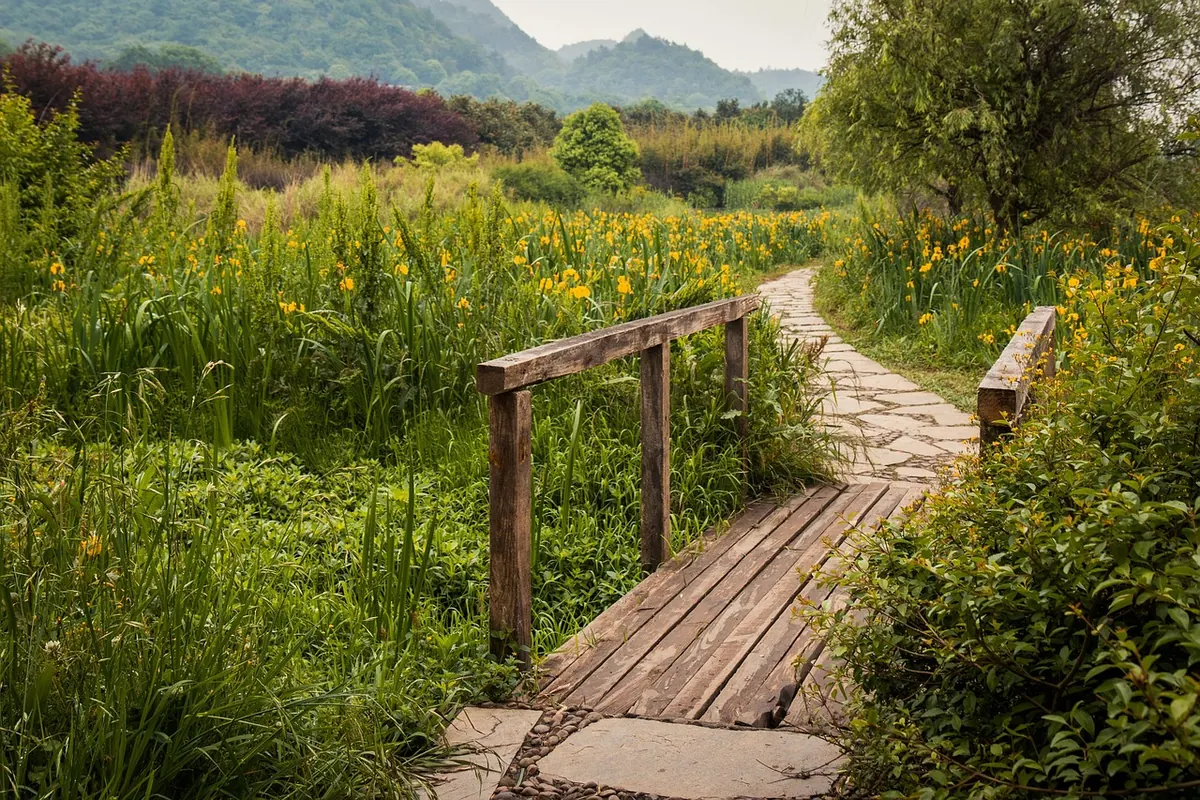
Photo: YangGuangWu / Pixabay
Related posts
More stories you’ll love reading